
10 Easy Tricks to Teach Your Dog Using Treats
Small rewards. Big applause. A whole lot of tail wagging.
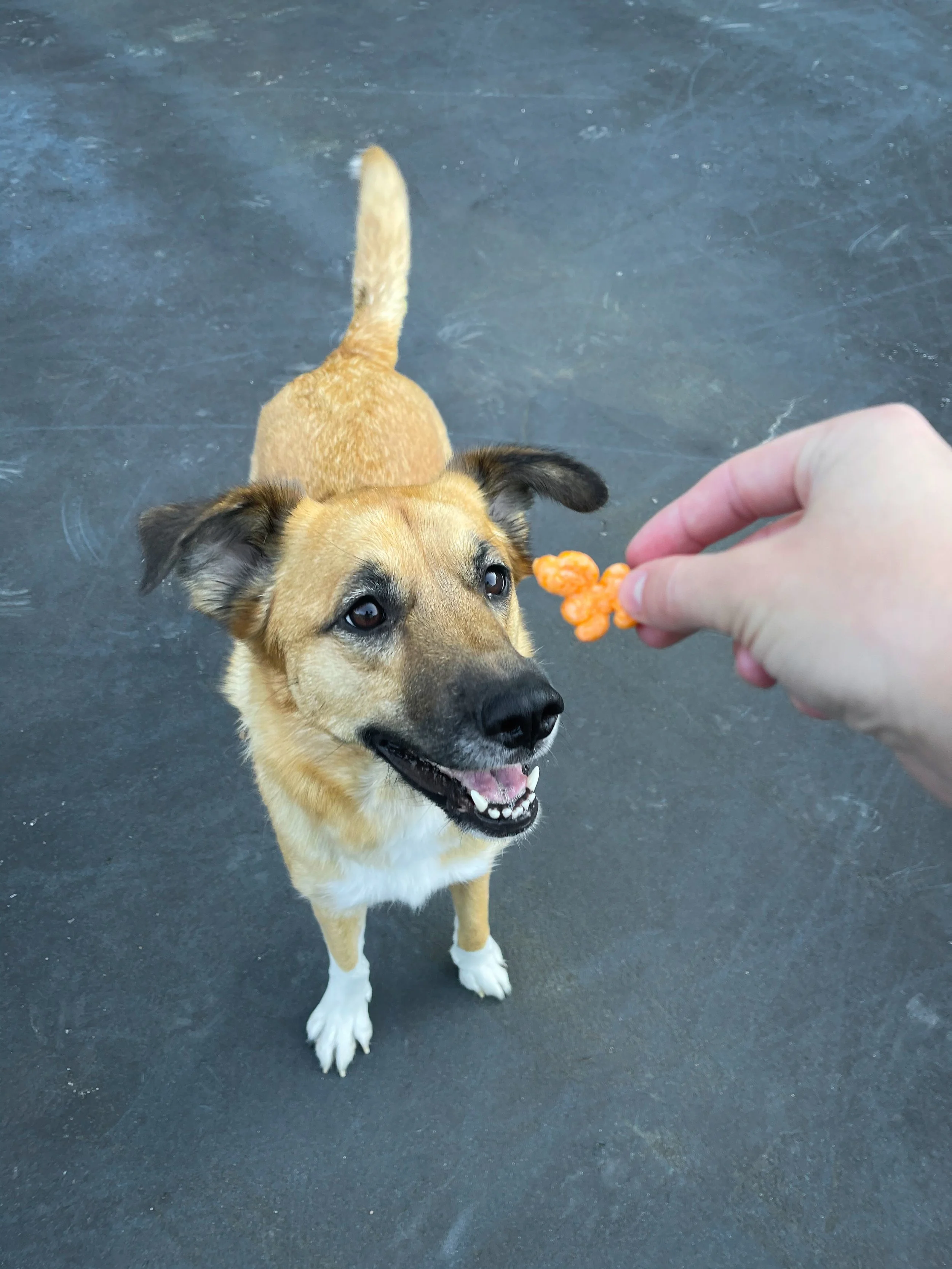
Your dog may never learn to unload the dishwasher (rude), but a high five, a spin, or a dramatic flop onto the rug? Absolutely within reach. The secret isn't a magic command. It's showing your dog exactly which tiny action earns a reward and making the next try just a little easier to understand. Here are ten tricks you can actually teach at home, starting with the basics and working up to the crowd-pleasers.
Before You Start: Set Up a Five-Minute Training Session
Choose a quiet room with a non-slip floor. Have 10 – 15 tiny, easy-to-eat treats ready, plus a few extras if you're working on a new skill. Pick one marker word (such as “yes!”) and say it the instant your dog does the right thing; deliver the treat immediately afterward. First practice the marker a few times: say “yes,” then give a treat. During a lesson, show the movement before naming it. Once your dog can repeat the action reliably, say the cue just before your hand signal. Work on one new skill at a time and stop while your dog is still interested.
1. Sit
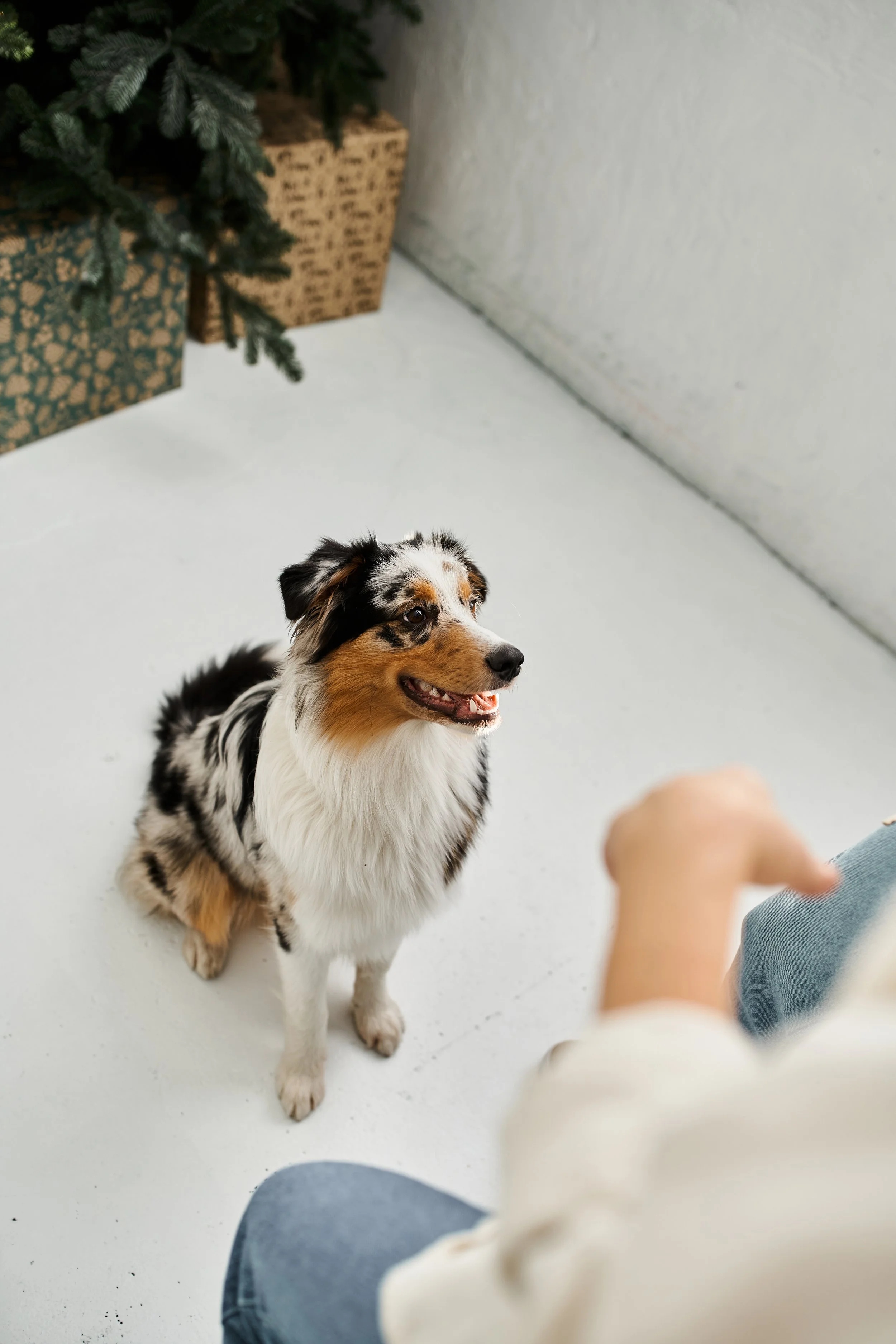
Step 1: Stand in front of your dog and hold a treat at nose level. Step 2: Move it slowly up and a little toward the back of their head just enough that their nose follows, and their rear naturally lowers. Step 3: The instant their bottom touches the floor, say “yes!” and deliver the treat. Step 4: Repeat a few times, then try the same hand motion without a treat in your fingers; reward from your other hand. Step 5: Once the motion is predictable, say “sit” before making the gesture. If your dog backs up instead of sitting, try practicing with a wall a few feet behind them; don't push their hips down.
Try next: Ask for a sit before clipping on the leash or tossing a toy. Reward the sit, then let the fun begin.
2. Stay
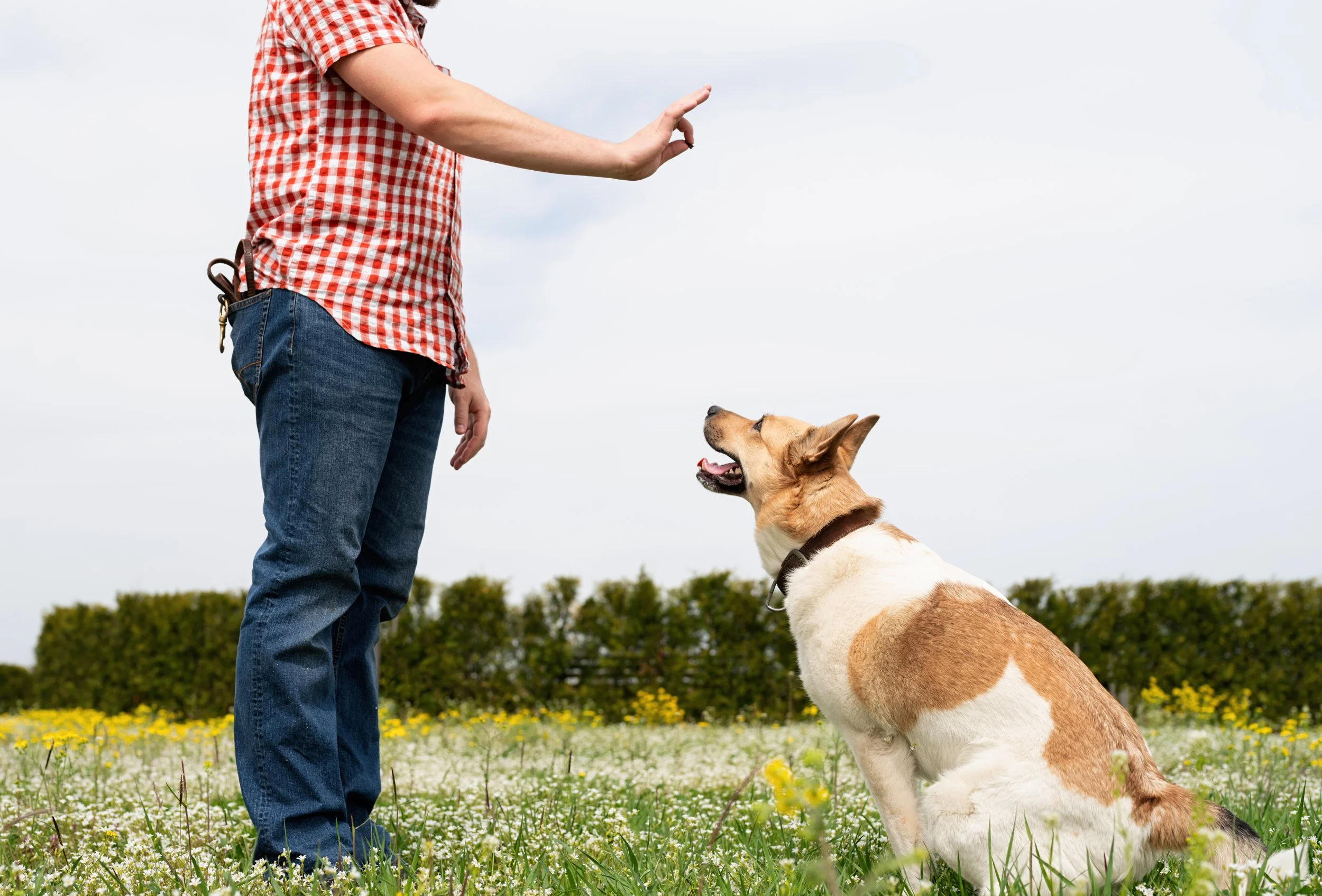
Step 1: Ask for a sit or down. Step 2: Say “stay,” pause for one second, mark “yes,” and reward while your dog is still in position. Step 3: Add a release word such as “okay” so your dog knows when the exercise is finished. Step 4: Build duration first: one second, then two, then three. Only after several easy successes should you take one small step away, immediately return, and reward. If your dog gets up, the exercise was too hard; shorten the time or distance. Don't call your dog out of every stay, practice walking back to them so staying put is worthwhile.
Try next: Practice while you take one step toward a doorway, then return. Add distractions only after the basic stay is solid.
3. Come
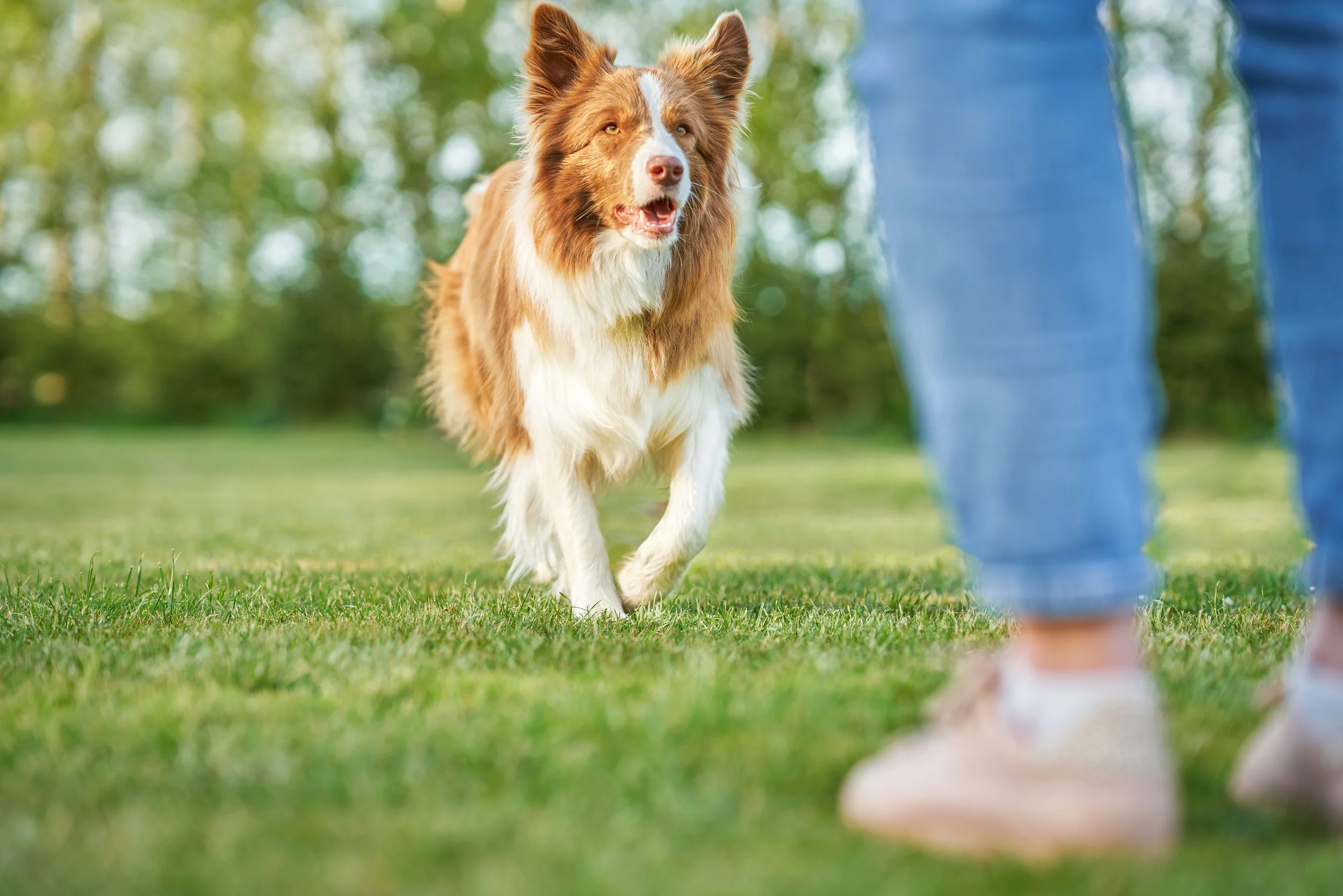
Step 1: Start indoors with your dog only a few feet away. Step 2: Say their name once, then “come!” in a bright voice; crouch or take a few steps backward to invite them toward you. Step 3: When they reach you, mark and give several small treats in a row. Step 4: Gently touch their collar, reward them again, and release them to play. Step 5: Gradually practice from farther away and then on a long line in a safe outdoor area. Avoid using “come” only when playtime ends and never scold a dog for arriving slowly. Outdoors, keep them secure unless you're in a safely enclosed space.
Try next: Play a two-person recall game across the living room, taking turns calling and rewarding your dog.
4. Shake
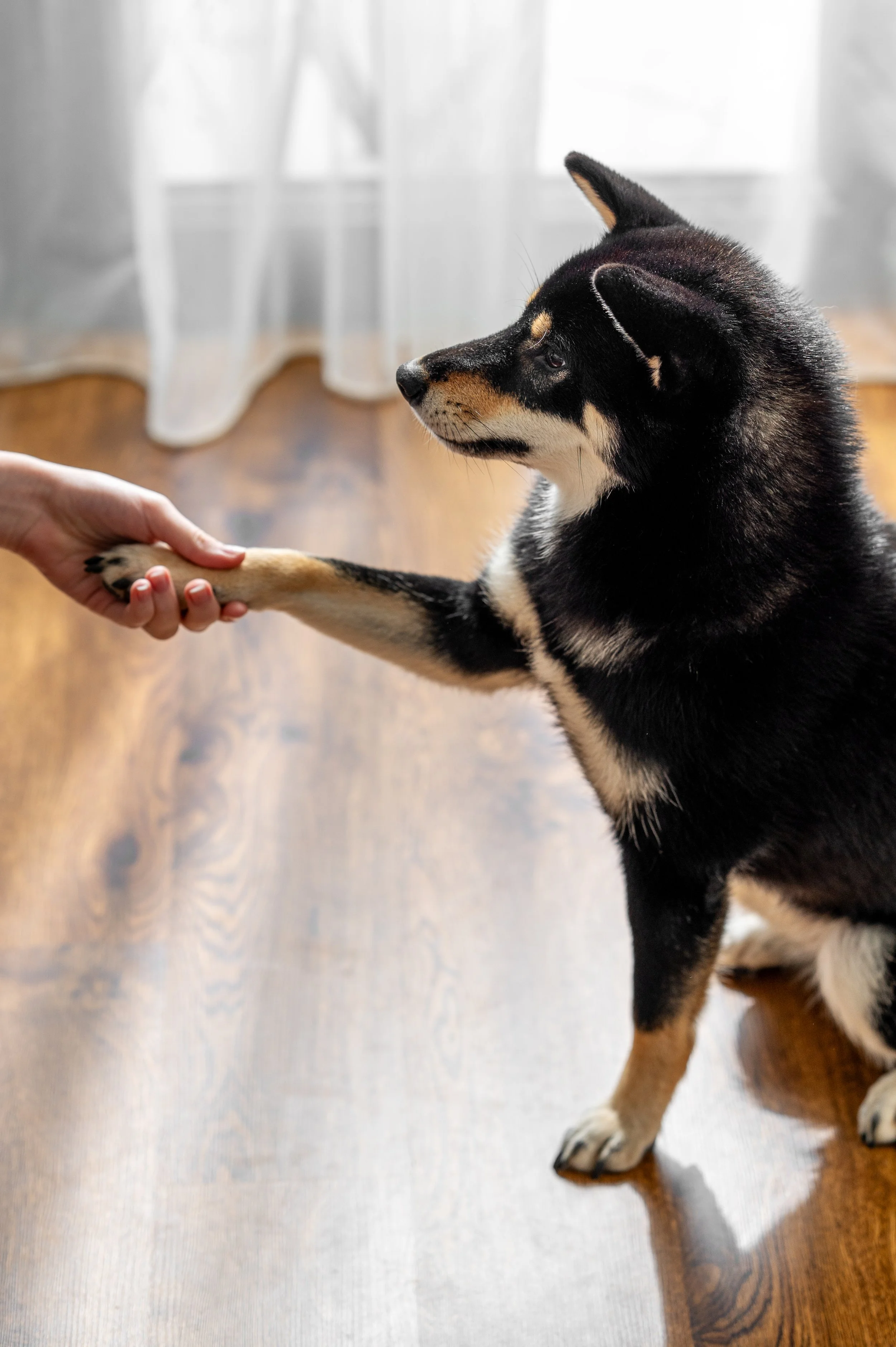
Step 1: Ask for a sit. Step 2: Present your open hand low beside one front paw and wait a moment. Step 3: Mark and reward even a tiny paw lift or movement toward your hand. Step 4: On the next repetitions, wait for the paw to actually touch your palm before marking. Step 5: Once the paw touch happens consistently, say “shake” just before offering your hand. If your dog only sniffs your fingers, reset and reward smaller paw movements; don't grab or pull their leg.
Try next: Offer your other hand and see whether your dog can learn “other paw.” Two tricks, one handshake.
5. Down
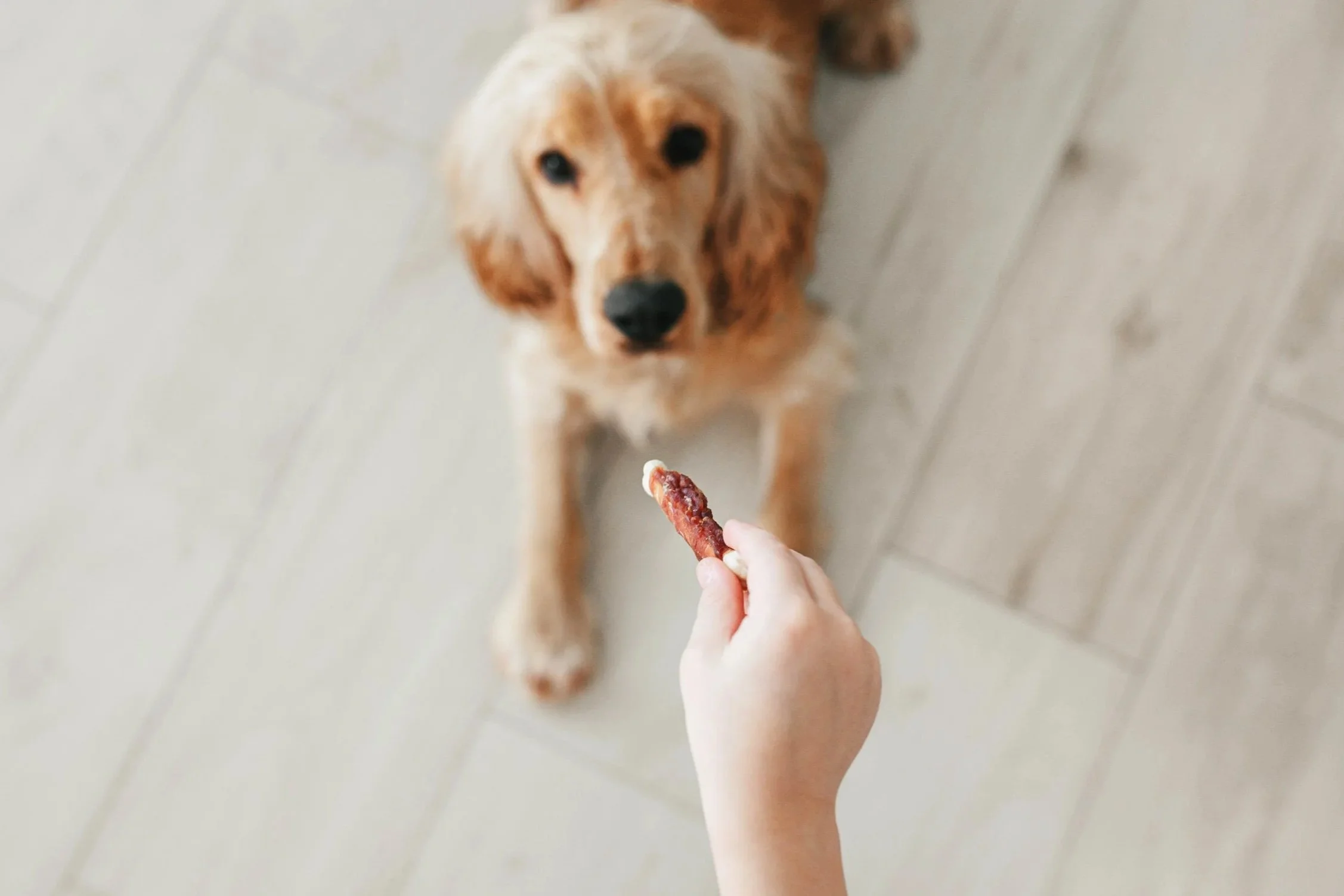
Step 1: Start with your dog standing or sitting on a non-slip surface. Step 2: Hold a treat at their nose and lower it straight toward the floor between their front paws. Step 3: When their head follows, slowly move the treat a few inches forward so their elbows lower. Step 4: Mark and reward as soon as their chest or elbows reach the floor. Step 5: After several successful repetitions, add “down” before the hand motion and gradually make the motion smaller. If your dog stands up and walks after the treat, reset and move more slowly; don't press on their shoulders.
Try next: Ask for “down” on a familiar mat, then reward calm positioning there. Skip slippery floors.
6. Spin
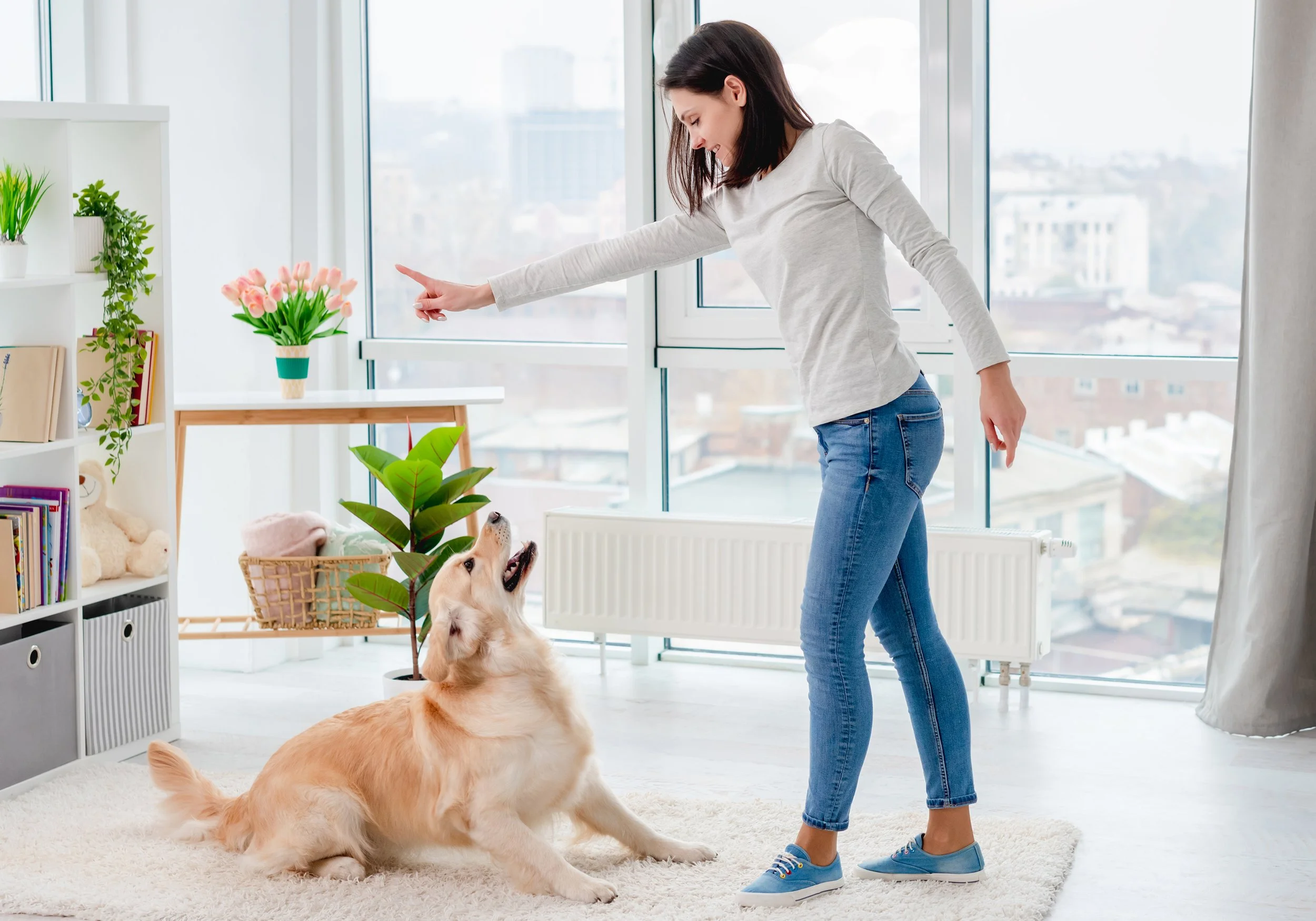
Step 1: Stand with your dog in an open area. Step 2: Hold a treat near their nose and slowly guide their head in a wide circle toward one shoulder. Step 3: Let their feet follow naturally; mark and reward when they complete the turn. Step 4: Repeat in the same direction until the movement is smooth, then say “spin” just before making the circle gesture. Step 5: Shrink the hand motion over time and reward from your other hand. If your dog stops halfway, reward a half-turn first and build from there. Don't pull on the collar or force tight turns.
Try next: Teach a separate cue for the opposite direction, such as “twirl.” Keep the circles comfortable and unhurried.
7. High Five
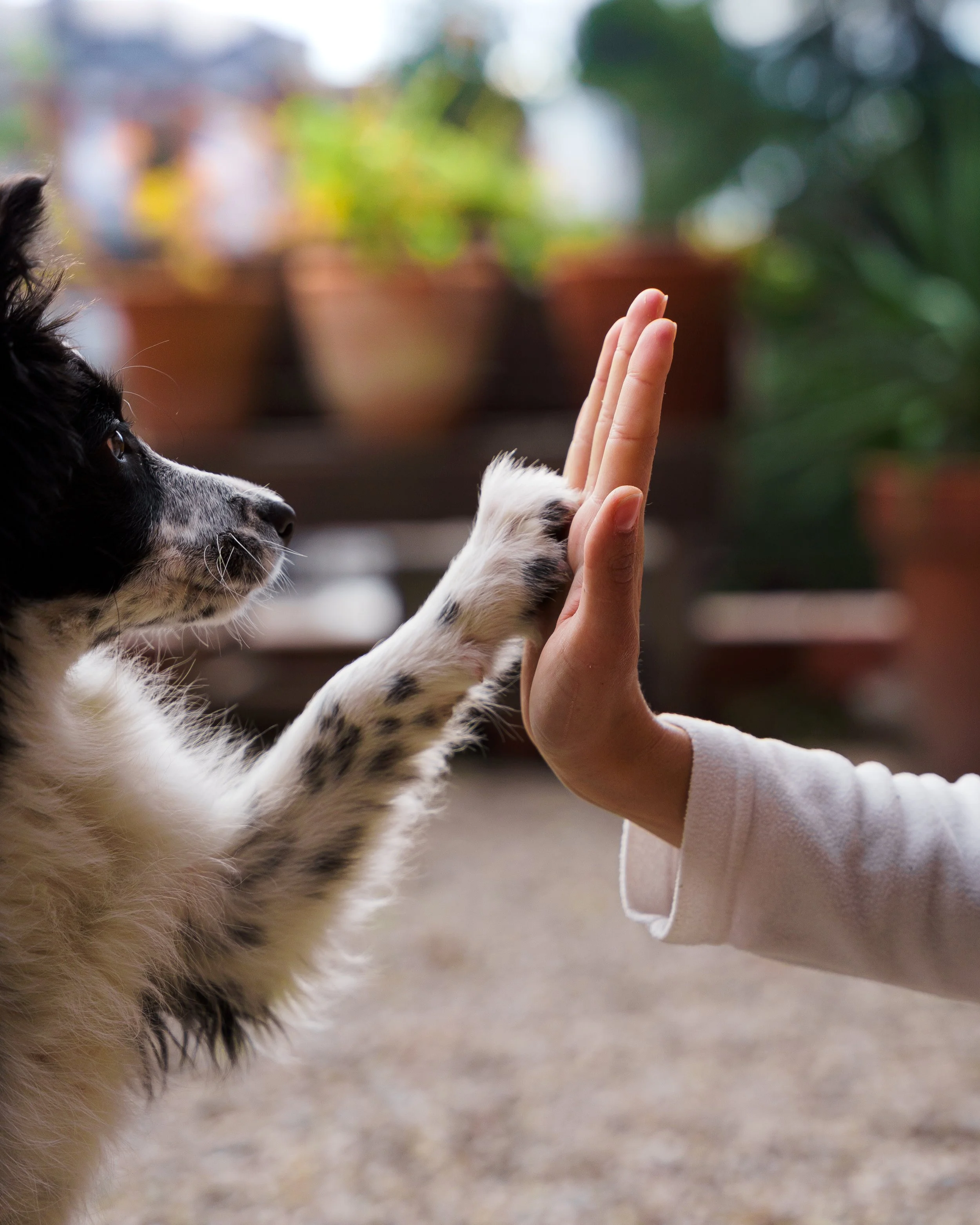
Step 1: Begin only after your dog understands “shake.” Step 2: Offer your palm vertically, slightly higher than for a handshake but still within an easy reach. Step 3: Mark and reward when their paw touches your palm. Step 4: Repeat, then say “high five” just before raising your hand. Step 5: Gradually reduce how much you move toward the paw so your dog reaches for the target. If they jump up, lower your hand and reward four paws on the floor before trying again.
Try next: Ask for a high five from a seated position before a game. Keep your hand low enough that your dog stays balanced.
8. Touch
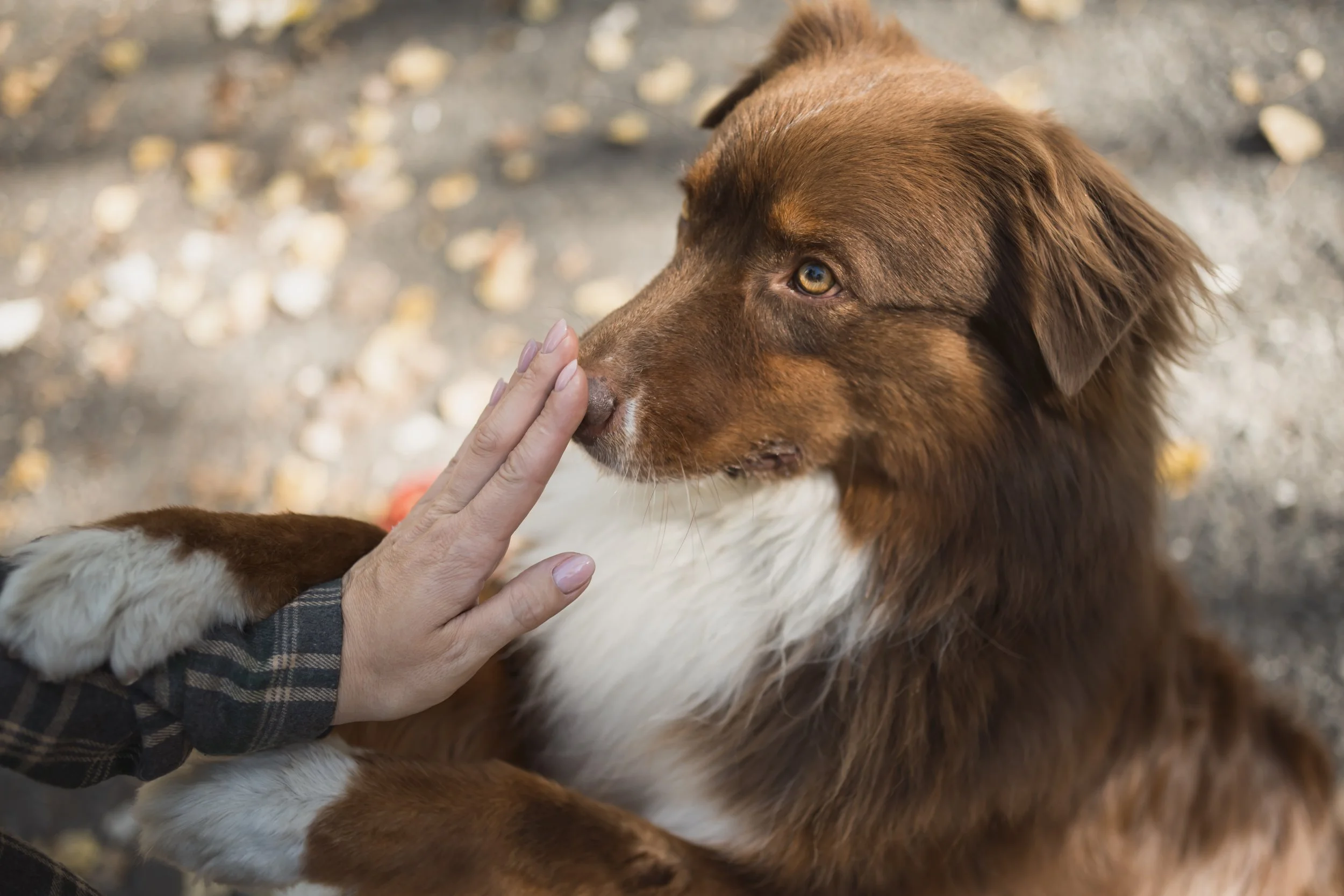
Step 1: Hold an open palm two inches from your dog's nose, fingers together. Step 2: Most dogs will lean in to investigate; the moment their nose touches your hand, say “yes” and reward with the other hand. Step 3: Move your target hand a few inches to the left or right and repeat. Step 4: When your dog eagerly seeks your palm, add the word “touch” before presenting it. Step 5: Gradually increase the distance by a step or two. If they lick or paw your hand instead, reward only the nose contact you want. Never shove your palm into their face.
Try next: Use “touch” to guide your dog onto a mat or toward the door without tugging on the leash.
9. Roll Over
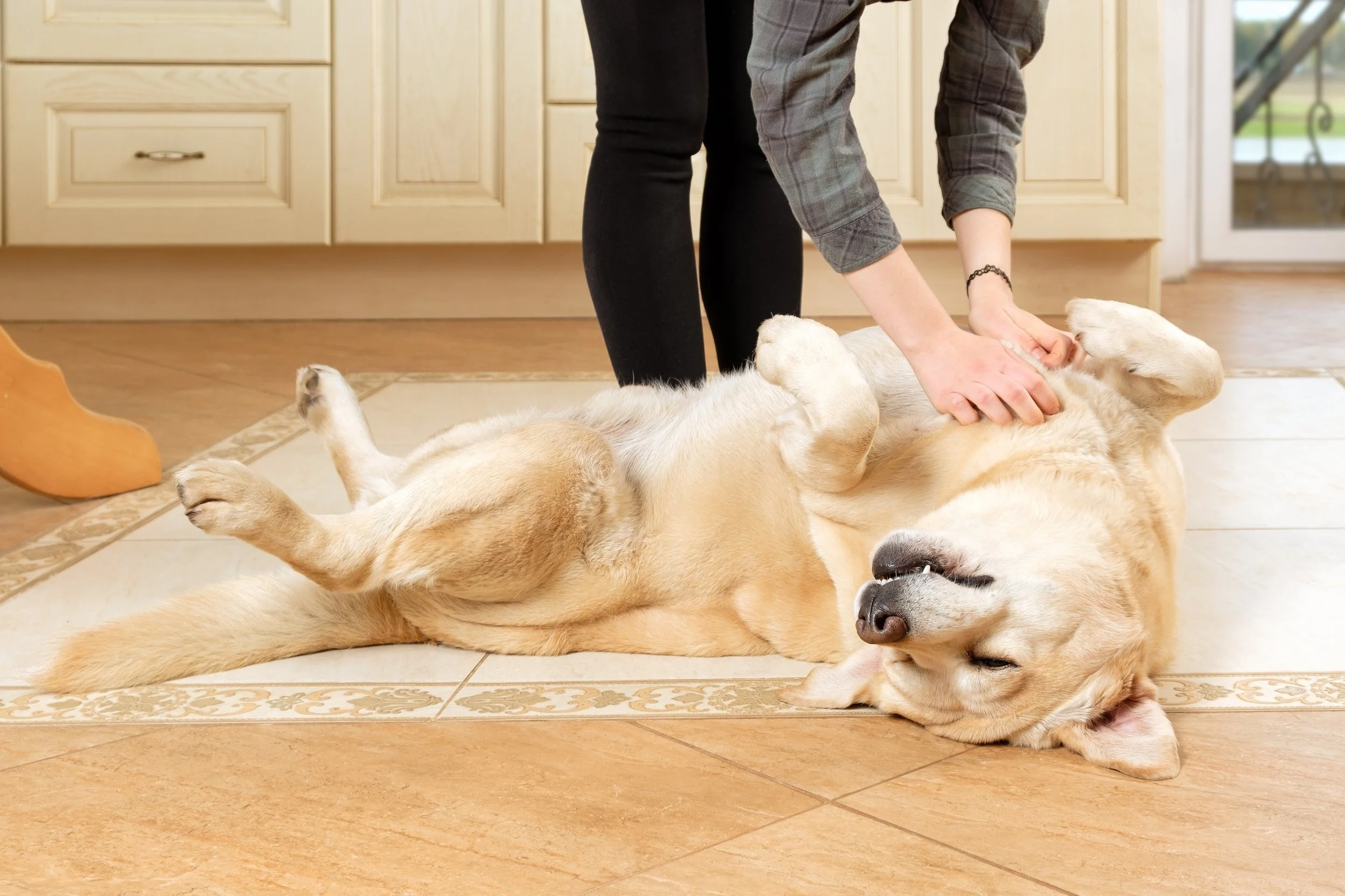
Step 1: Ask for “down” on a soft, non-slip surface. Step 2: Hold a treat near your dog's nose and slowly move it toward one shoulder, encouraging their head to turn. Step 3: Mark and reward when they shift onto one hip or side, don't rush the full roll. Step 4: Over several attempts, guide the treat in an arc over the shoulder so their body follows. Step 5: Reward a complete roll only if your dog offers it comfortably, then introduce “roll over” before the gesture. Some dogs dislike rolling or find it awkward; if yours resists, stick with the side-lying version and move on.
Try next: Practice one smooth roll on a rug, not repeated spins on a hard floor. Comfort comes before applause.
10. Play Dead
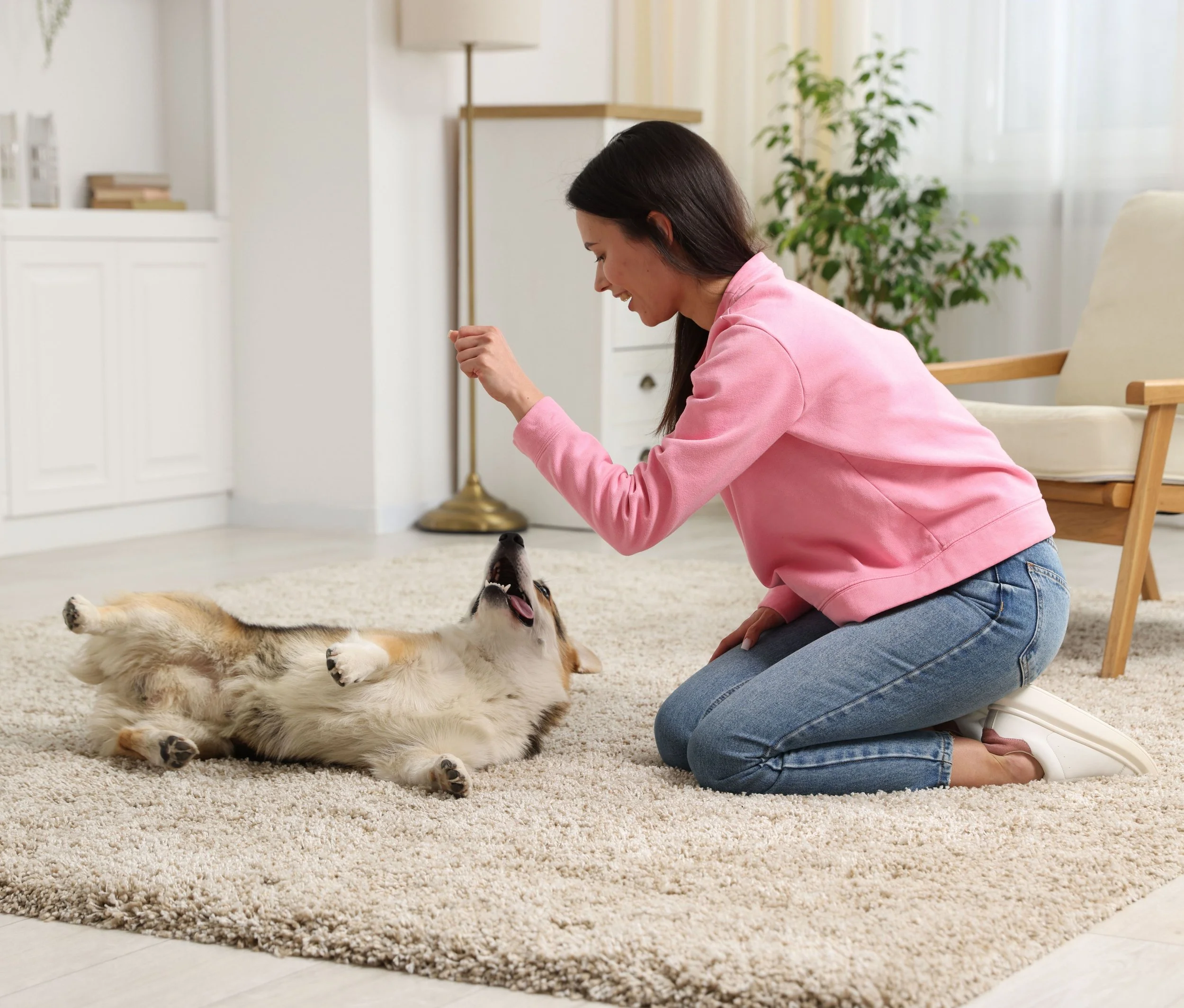
Step 1: Start with a relaxed “down” on a comfortable mat. Step 2: Move a treat toward one shoulder until your dog settles onto their side. Step 3: Mark and reward that side-lying position, even if it lasts only a moment. Step 4: Add a one-second pause before marking, then gradually extend it. Step 5: Once the pose is easy, say your chosen cue (“play dead” or “bang!”) before the hand signal. Use a separate release cue to end the performance. Don't push your dog over, and skip this trick if lying on their side seems uncomfortable.
Try next: Add a dramatic pause before the reward. Your dog supplies the acting; you supply the snacks.
Training Fixes That Actually Help
If your dog grabs at the treat instead of following your hand: hold the reward in a closed fist or use an empty guiding hand, then pay from the other hand. This separates the hand signal from the food.
If the trick works only when your dog sees a treat: do two or three repetitions with food in your guiding hand, then make the same motion with an empty hand and reward from a pocket or treat pouch. Fade the lure before it becomes part of the cue.
If your dog gets the trick once but can't repeat it: make the next repetition easier. Reward a half-turn before a full spin, one second before a five-second stay, or a paw lift before a handshake.
If your dog ignores the cue: avoid repeating “sit, sit, sit.” Say it once, wait briefly, then help with the familiar hand signal. On the next attempt, lower the difficulty so your dog can succeed.
If your dog loses interest: change the setting, reduce distractions, or stop after one easy win. Keep rewards small and count all treats toward the day's feeding directions; the goal is more successful repetitions, not a mountain of snacks.
Which Trick Gets the Biggest Applause?
Start with “touch” or “sit” if your dog is brand-new to training. Once you've built a little momentum, graduate to “shake,” “spin,” or a crowd-pleasing high five. Some dogs learn quickly; others need more practice, and that's part of the fun. Whether your pup becomes the neighborhood trick champion or simply masters one excellent handshake, every little win deserves a POP!
Explore Pup Corn Plus at PupCornPlus.com. Choose treat portions appropriate for your dog, follow package feeding directions, and supervise training. If a movement seems uncomfortable, skip it.
You May Also Like:
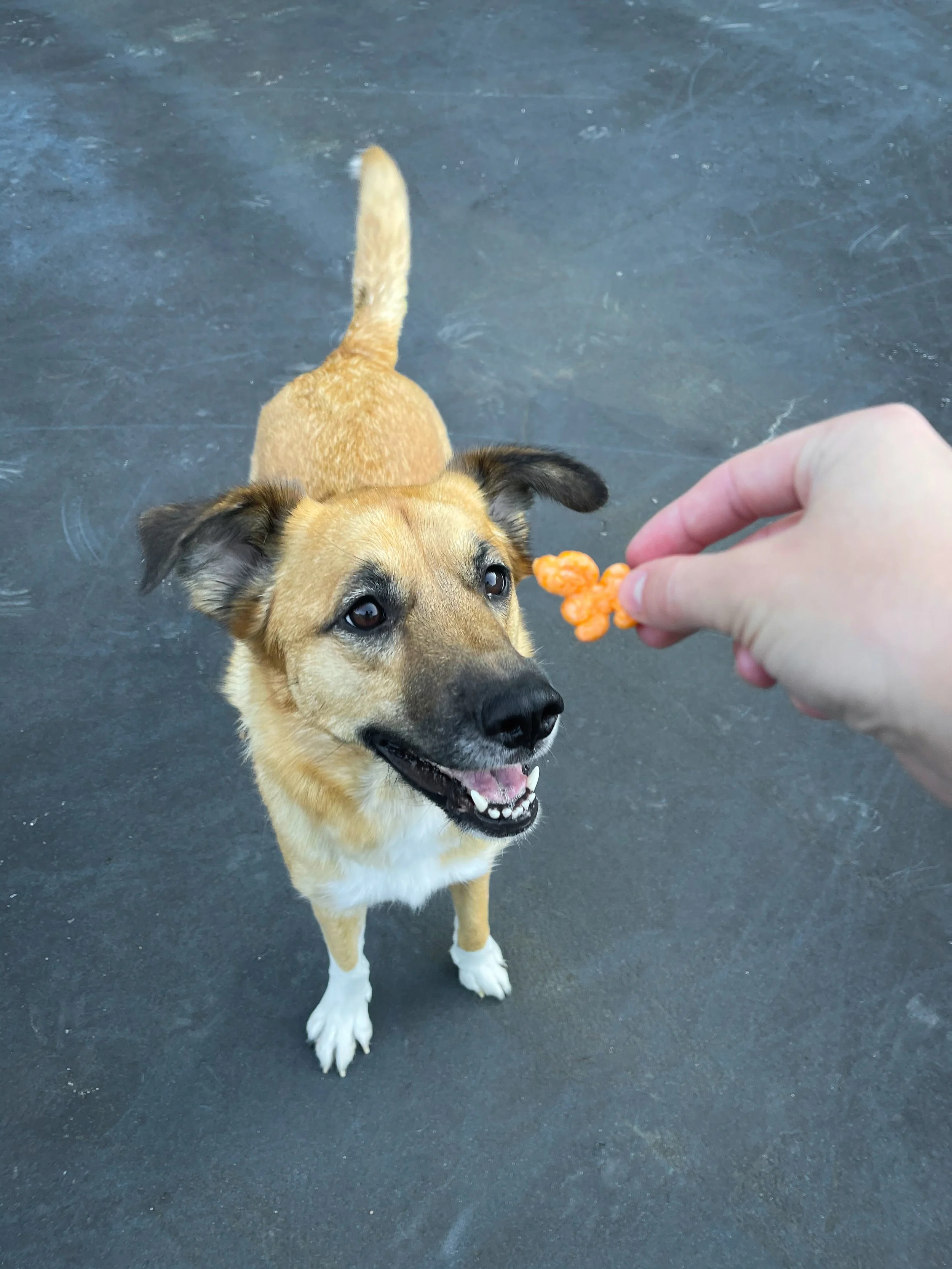




Find Us On Amazon

Got any new tricks to show off?? Share your pics with us @pupcorntreats on Instagram.


